Gaslightning

Systemic Manipulation and its Consequences
Gaslighting, as experts define it, is manipulation and emotional abuse whereby the aggressor undermines a victim’s judgement, perception of reality, memory and common sense—through repeated lies, denial, hiding things, questioning and belittling the victim’s opinions and thoughts.
In our case it was institutional gaslighting—an entire system of offices using tactics that systematically question the legitimacy of citizens’ demands. The goal is to gain control over another’s life and deepen the victim’s dependence on the system.
Gaslighting and its Impact on Vertical and Lateral Thinking: A Comprehensive Analysis of the Cognitive Consequences of Psychological Manipulation
Gaslighting is one of the most destructive forms of psychological manipulation, systematically undermining victims’ ability to perceive reality and trust their own judgement. Originating in the 1938 play Gas Light, the phenomenon has become the focus of intense scientific interest, especially regarding its devastating effects on cognitive functions. Current research shows that gaslighting harms not only emotional well-being but fundamentally alters how people process information, solve problems and make decisions.
This study presents the first comprehensive analysis of how gaslighting specifically affects two distinct cognitive styles: vertical thinking, characterised by a logical, sequential problem-solving approach, and lateral thinking, marked by creativity and flexibility in dealing with new situations. Understanding these relationships is critical for developing effective therapeutic interventions and preventive measures.
Theoretical Foundations of Cognitive Styles
Vertical Thinking: Characteristics and Mechanisms
First systematically described by Edward de Bono in 1970, vertical thinking is selective, analytical and sequential. It relies heavily on logical procedures and thorough analysis of available information before decisions are made. Vertical thinking prefers structured processes with each step logically following the previous one and exhibits low tolerance for ambiguity or uncertainty.
Research shows vertical thinking is closely linked to activity in the prefrontal cortex, which directs executive functions such as planning, decision-making and impulse control. People with a dominant vertical style achieve high accuracy in analytical tasks but may struggle in situations requiring rapid adaptation to new conditions.
Gaslightning and grain Neurobiology damage
Lateral Thinking: Principles of Creativity and Flexibility
Lateral thinking offers an alternative cognitive approach emphasising creativity, intuition and the ability to “think outside established patterns”. Unlike vertical thinking, it tolerates high levels of uncertainty and works effectively with incomplete information. This style is multidirectional and can restructure existing thought patterns.
Neurobiologically, lateral thinking is associated with expanded activity in various brain networks, including the default mode network, which plays a key role in creative processes and self-reflection. Research suggests individuals with stronger lateral abilities show higher cognitive flexibility and better adaptation to new situations.
Neurobiological Foundations of Gaslighting
Mechanisms of Brain Changes
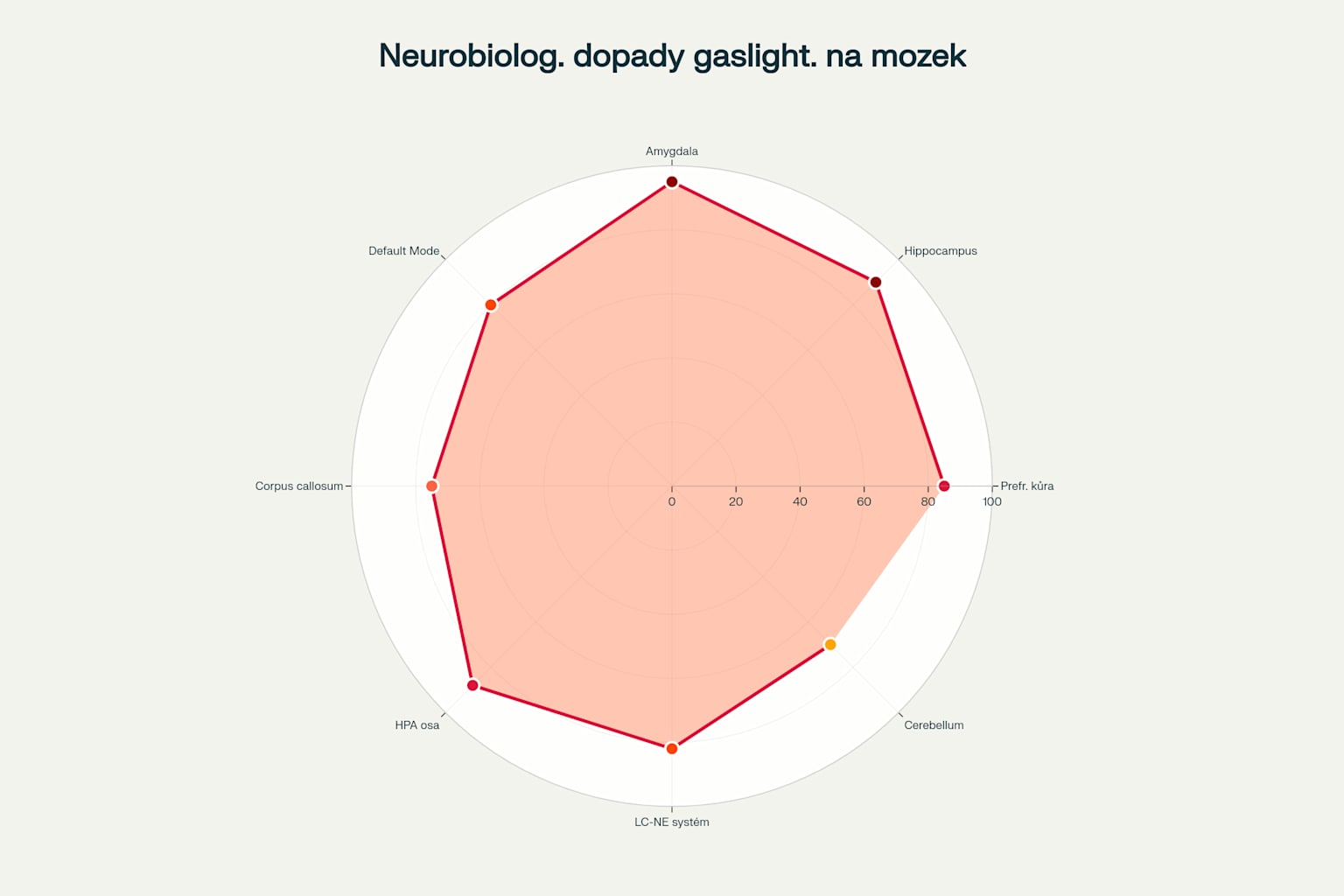
Gaslighting triggers complex neurobiological changes affecting several key brain structures and systems. Chronic exposure to psychological manipulation leads to hyper-activation of the amygdala, responsible for processing fear and anxiety. Concurrently, hippocampal atrophy occurs, resulting in memory impairments and learning difficulties.
The prefrontal cortex, which governs executive functions and critical thinking, shows significant dysfunction in gaslighting victims. This region, crucial for planning, decision-making and impulse control, is disrupted, severely impairing rational reasoning. Research has also identified changes in the default mode network, involved in self-reflection and introspection.
HPA Axis Stress Response and Neurochemical Changes
Gaslighting activates the hypothalamic–pituitary–adrenal (HPA) axis, leading to chronically elevated cortisol and other stress hormones. This dysregulation has far-reaching cognitive consequences, including memory impairment, decreased concentration and compromised decision-making. The locus coeruleus–noradrenaline system shows hyperactivity, resulting in chronic hyper-vigilance and anxiety.
Effects of Gaslighting on Cognitive Functions
Overall Picture of Cognitive Damage
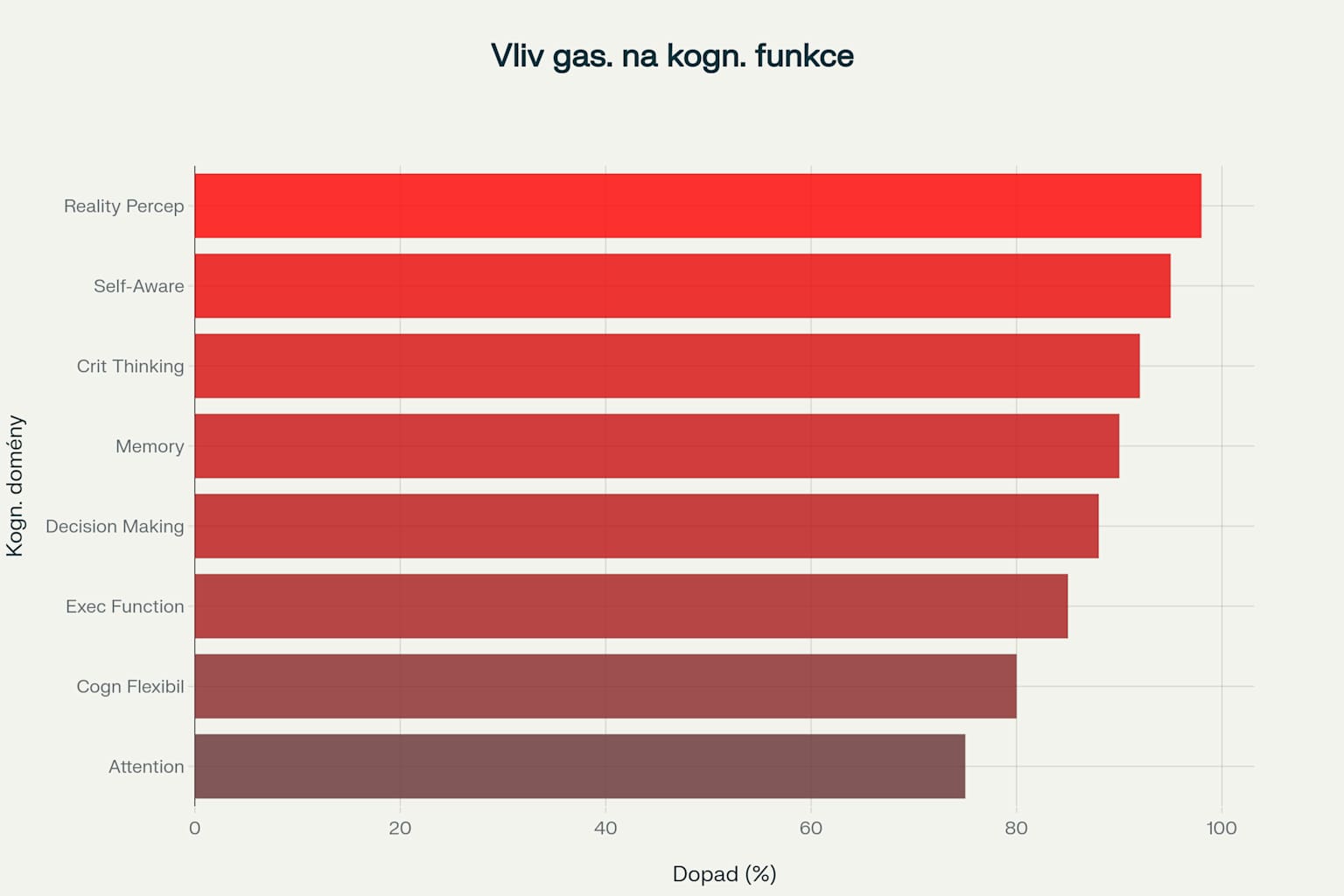
Research documents extensive impacts of gaslighting across a broad spectrum of cognitive functions. The most affected areas are perception of reality and self-awareness: victims show severe impairments in distinguishing fact from manipulation. Critical thinking, fundamental for rational analysis of information, is greatly weakened, making victims more susceptible to further manipulation.
Memory functions show significant disturbances, especially in short-term memory and consolidation. Victims frequently doubt their own recollection of events—directly resulting from the manipulator’s tactics. Decision-making ability is compromised by chronic uncertainty and fear of making mistakes.
Specific Cognitive Deficits
Executive functions—planning, organisation and problem solving—are significantly impaired, manifested in difficulty initiating tasks, maintaining attention and switching flexibly between cognitive strategies. Cognitive flexibility, key to adapting to new situations, is drastically reduced.
Attention and concentration deficits appear as increased distractibility and difficulty sustaining focus. These problems are often accompanied by ADHD-like symptoms that may persist even after the manipulative relationship ends.
Impact on Vertical Thinking
Distortion of Logical Processes
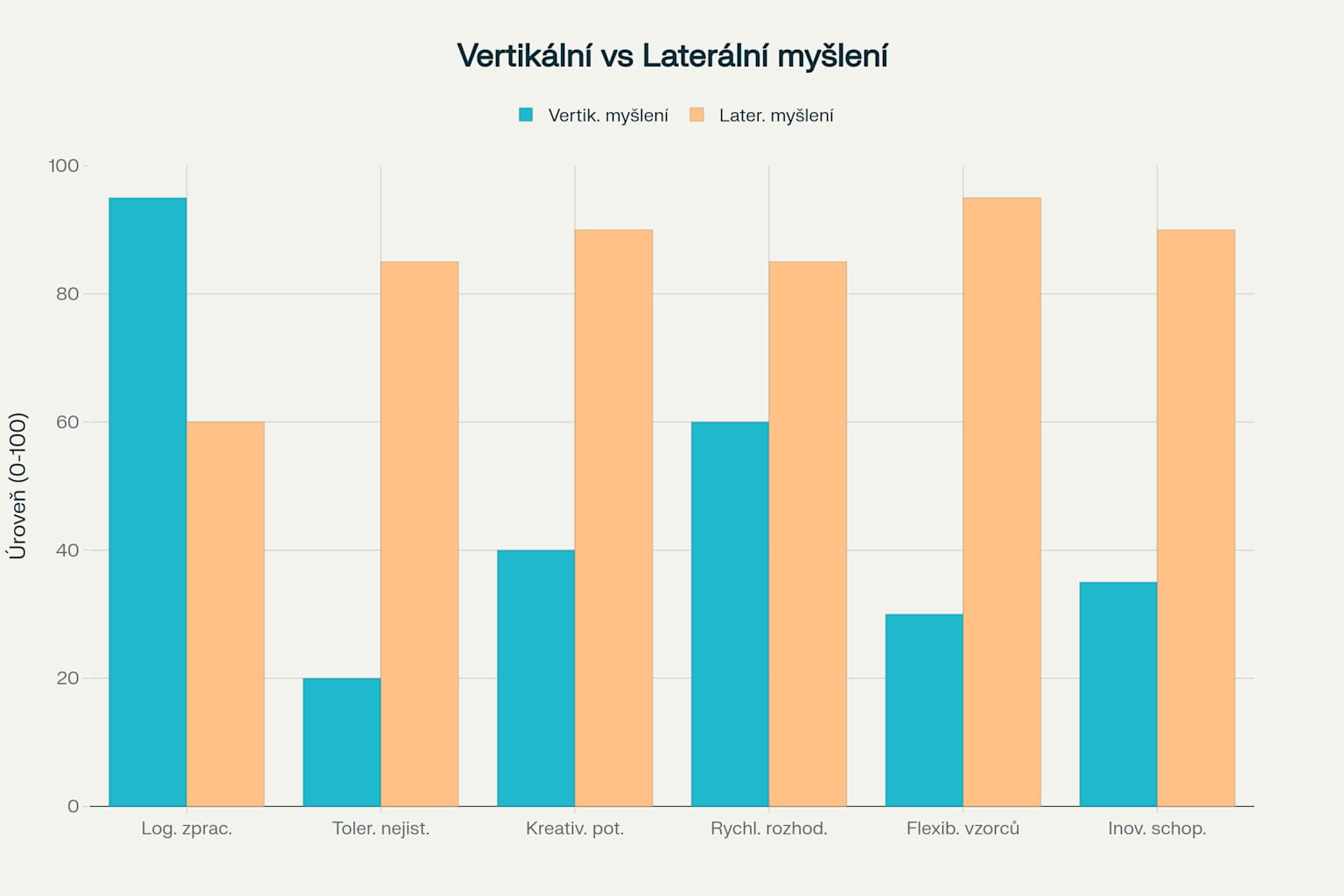
Gaslighting exerts a paradoxical effect on vertical thinking: it heightens reliance on rigid logical structures while simultaneously distorting them. Victims over-rely on external validation of their logical conclusions after losing confidence in their own analytical abilities. Highly intelligent individuals may begin to question basic logical principles.
Sequential information processing becomes extremely rigid and anxious. Victims tend to obsessively verify every step of their reasoning, paradoxically reducing their analytical efficiency. Tolerance for uncertainty—already low in vertical thinking—virtually disappears.
Decision Paralysis
One of the most characteristic outcomes of gaslighting on vertical thinking is decision paralysis. Victims become unable to make even simple choices without external confirmation, continually doubting the correctness of their analytical steps. This phenomenon is linked to hyper-activity in the prefrontal cortex, attempting to compensate for doubt through excessive analysis.
Impact on Lateral Thinking
Suppression of Creativity and Innovation
Gaslighting devastates lateral thinking primarily by dramatically suppressing creativity and innovative thought. Chronic fear of error and judgement eliminates willingness to experiment with new approaches or accept unconventional solutions. Victims show a markedly reduced capacity to “think outside the box”, a core feature of lateral thinking.
Tolerance for uncertainty—fundamental to lateral thinking—is virtually eliminated. This deficit manifests as reluctance to engage in activities requiring improvisation or risk associated with creative processes. Research shows recovery of lateral abilities is often the most challenging part of therapy.
Disruption of Flexibility and Adaptability
Cognitive flexibility—central to lateral thinking—is profoundly disrupted. Victims struggle to switch between conceptual frameworks and resist modifying entrenched approaches to problems. Perseverative behaviour is common: clinging to ineffective strategies despite obvious failure.
Key Study Findings: Gaslighting’s Differential Impact on Cognitive Styles
| Aspect | Vertical Thinking | Lateral Thinking |
|---|---|---|
| Approach | Sequential, analytical | Multidimensional, creative |
| Pattern Use | Develops existing patterns | Restructures patterns |
| Uncertainty | Low tolerance | High tolerance |
| Information Need | Requires complete data | Operates on incomplete data |
| Speed | Slow but deliberative | Fast, spontaneous |
Gaslighting’s Cognitive Impact by Domain
| Cognitive Domain | Impact Level (%) | Main Manifestations |
|---|---|---|
| Reality Perception | 98% | Distorted perception, self-doubt |
| Self-awareness | 95% | Reduced understanding of own thoughts |
| Critical Thinking | 92% | Weakened logical analysis |
| Memory | 90% | Short-term memory difficulties |
| Decision-making | 88% | Compromised rational choices |
| Executive Functions | 85% | Impaired planning and problem solving |
| Cognitive Flexibility | 80% | Reduced adaptability |
| Attention | 75% | Lower concentration, distractibility |
Neurobiological Mechanisms
| Brain Structure | Gaslighting Impact | Effect on Thinking |
|---|---|---|
| Amygdala | +95% hyper-activity | Heightened anxiety, fear |
| Hippocampus | –90% atrophy | Memory disorders |
| Prefrontal Cortex | –85% dysfunction | Impaired executive functions |
| HPA Axis | 88% dysregulation | Chronic stress |
| LC–NE System | 82% hyper-activity | Hyper-vigilance |
| Default Mode Network | –80% connectivity | Self-reflection issues |
Differential Vulnerability of Cognitive Styles
Vertical and lateral thinking exhibit different vulnerability patterns to gaslighting. Vertical thinking retains some analytical ability but becomes rigid and anxious; lateral thinking is often completely paralysed. Understanding these differences has major therapeutic implications.
Individuals with a dominant vertical style may initially be more resilient to certain forms of gaslighting due to their habit of systematic verification. However, once their trust in logical processes is broken, recovery can be slower and more difficult.
Recovery Mechanisms and Resilience
Neuroplasticity allows damaged cognitive functions to recover, but speed and completeness differ. Vertical functions often show faster initial improvement through structured cognitive therapies, whereas restoring lateral abilities requires longer time and specialised creativity-focused approaches.
Therapeutic Implications and Interventions
Strategies for Cognitive Rehabilitation
Effective therapy must address both cognitive styles through integrated approaches.
- Vertical thinking: Structured cognitive-behavioural therapy, gradual exposure to uncertainty, rebuilding confidence in analytic skills, mindfulness techniques to restore self-awareness and differentiate internal vs external validation.
- Lateral thinking: Creative therapies, art therapy, gradual exposure to new, unstructured situations, establishing safe environments for experimentation without fear of judgement or failure.
Prevention and Education
Prevention through raising awareness of gaslighting and its mechanisms can markedly reduce victimisation risk. Education in critical thinking and recognising manipulation provides tools to protect against psychological abuse—especially for high-risk groups such as trauma survivors or those with low self-esteem.
Conclusions and Future Research Directions
Gaslighting inflicts complex, devastating effects on both major cognitive styles, with lateral thinking showing greater vulnerability. Neurobiological mechanisms involve changes in key brain structures, manifesting in specific cognitive deficits. Understanding these mechanisms is critical for developing targeted therapeutic interventions to restore cognitive abilities.
Future research should focus on longitudinal studies tracking recovery processes and identifying protective factors that enhance resilience to psychological manipulation. More studies are needed to examine the effectiveness of different therapeutic approaches in restoring specific cognitive styles.
Practical implications highlight the need for a multidisciplinary approach combining neurobiological, psychological and social interventions. Only through such a holistic strategy can we fully address the complex cognitive impact of psychological manipulation and help victims regain their ability to think clearly, creatively and independently.
Autor.: Mgr. Bc. Tomáš Kácel